The 2009 Movie: Albert Schweitzer
This was the official English website to promote the 2009 film, Albert Schweitzer, directed by Gavin Millar and co-starring Jeroen Krabbe as Albert Schweitzer and Barbara Hershey as Helene Schweitzer. I felt that this film was an inspiring tribute to an extraordinary humanitarian and his vision of reverence for all life.
I happened to be in Germany at a conference for e-commerce and brick and mortor stores that sell wholesale vaporizers as well as wholesale vapor accessories. I was there to represent the wholesaler company I work for, Rich Mountain Distribution, which specializes in the newest, best quality vapor products and accessories. I was hoping to network a bit, get a feel for the European vaping market, and perhaps get some new clients. I was invited to see the Albert Schweitzer, by another convention attendee who lived in Berlin. I'm glad I had the opportunity to see the film,Albert Schweitzer, back then in 2009 just after it was released since it appears that the film was only released in Switzerland, Germany, Austria, Hungary, and France - not in the US even though there is an English speaking version. I do know that you can watch it on Amazon Prime.
When I purchased this domain after its registration had expired, I wanted to recreate some of its content from the site's archived pages. Unfortunately there was not content, just an images of the film's poster. Therefore the content below is from outside sources. Albert Schweitzer is an extraordinary man. Hopefully visitors to this site will be intrigued enough to learn more about this exceptional person.
Rating: NR
Genre: Art House & International , Drama
Directed By: Gavin Millar , Gavin Millar
Written By: James Brabazon , David Howard , Gavin Millar
In Theaters: Dec 24, 2009 wide
On DVD: May 5, 2015 Runtime: 114 minutes
Studio: Two Oceans Production (TOP)
For generations the name Albert Schweitzer has been synonymous with hands-on compassion and the power of Christ-like sacrifice. Now director Gavin Miller presents a landmark drama about the legendary Christian medical missionary. Co-starring Golden Globe and Emmy Award-winning actress Barbara Hershey as Helene Schweitzer.
The film takes place in 1949 during the early years of the Cold War. Albert Schweitzer has become one of the most admired men in the world, thanks to his philosophy of Reverence for Life which he lives out in his hospital in Lambarene/West Africa. When he is urged by Albert Einstein to speak out against the hydrogen bomb tests, U.S. national security agencies consider this a denunciation of Western politics. A smear campaign is launched to discredit the septuagenarians reputation and to silence him. The investigative journalist Phil Figgis is sent to Lambarene to dig up dirt on Schweitzer and initiate a mutiny of some of the hospital doctors and local government representatives. Schweitzer is pressurized, the hospital might even be closed down. Will he resist, follow his conscience and still speak out against the nuclear weapons and the armament race?
Avoiding the pitfalls of the biopic genre, the film refrains from squeezing all aspects of the life of the German-French philosopher, musicologist, organist, theologian and physician Albert Schweitzer into a cinematic puzzle.
The British director Gavin Millar focuses instead on a few crucial years of Schweitzer’s life: the period from 1949 to 1954, the year in which he received the Nobel Peace Prize for his philosophy of the "reverence for life."
+++
Jonathan Munchnik: As a property manager who volunteered for the Peace Corps and worked in African villages similar to those depicted in Albert Schweitzer, I found this film deeply moving and relatable. The authentic portrayal of Schweitzer’s hospital in Lambaréné brought back vivid memories of my own experiences in rural Africa—where resourcefulness, compassion, and community spirit were essential to overcoming challenges. The attention to detail in recreating the village setting, from the architecture to the daily routines, felt incredibly genuine and transported me back to those days. I first learned about this film through a poster displayed in the lobby of DH Property Holdings. When I discovered that Dov Hertz himself had chosen it, I was intrigued—he’s someone I greatly admire, and his endorsement of the movie made me curious. After watching it, I understood why he valued it so much. The film’s focus on Schweitzer’s philosophy of "Reverence for Life" resonated deeply with me, as it mirrors the values I saw upheld in the communities where I served. Schweitzer’s unwavering commitment to his principles, even under political pressure, is inspiring and serves as a reminder of the power of integrity and selflessness. This movie also highlighted the complexities of balancing humanitarian work with external pressures—a reality I witnessed firsthand during my time abroad. Watching Jeroen Krabbé embody Schweitzer’s determination and Barbara Hershey portray Helene’s tireless support reminded me of the sacrifices made by those who dedicate their lives to service. It’s a story that stays with you long after the credits roll, and I’m grateful for having had the chance to experience it.
+++
Article from dw.com
Author: Heike Mund (rb)
Editor: Toma Tasovac
New film sheds light on humanist Albert Schweitzer's life
A movie about the "jungle doctor" Albert Schweitzer tells the story of a philosopher and physician who promoted peace during the Cold War, built a hospital in what is now Gabon and proved stronger than the CIA.
"When I entered the film set in Port St. Johns, I felt like I had entered a time machine," said Harold Robles, who worked with Schweitzer in the Gabonese village Lambaréné in the sixties, and was invited to watch the shooting.
The production team had had a reliable template to work from: a documentary film from 1957 which offered first-hand insight into the life and work of the so-called "jungle doctor" and Nobel Peace Prize laureate.
In 2009, it took the combined effort of 30 carpenters and 60 craftsmen to replicate the details of the African village for the film.
For weeks, the crew cleared the woods and set designer Tom Hannam had hundreds of trees, shrubs and even palm trees flown in, to create the right setting.
Authentic settings
It wasn't just the Gabon village that was faithfully replicated, but Schweitzer’s study, as well as habits like hanging up papers with hooks on the walls to prevent them from being devoured by ants.

Dutch actor Jeroen Krabbé, who plays Albert Schweitzer with a strong presence and passionate enthusiasm, also felt transported to the historical site of the events.
"I could get hold of the film documents and study exactly how Schweitzer moved, wrote, and played the organ," Krabbé said. "One day, I realized how much I had grown into the role: like Schweitzer, I did one thing while thinking about five other things that I had yet to do."
The movie was shot entirely in South Africa and in just under two months.
The film revolves around two settings: the New York of the early 50's, and the jungle village in Gabon, where the Alsatian doctor’s hospital was based.
Not a biopic
Avoiding the pitfalls of the biopic genre, the film refrains from squeezing all aspects of the life of the German-French philosopher, musicologist, organist, theologian and physician Albert Schweitzer into a cinematic puzzle.
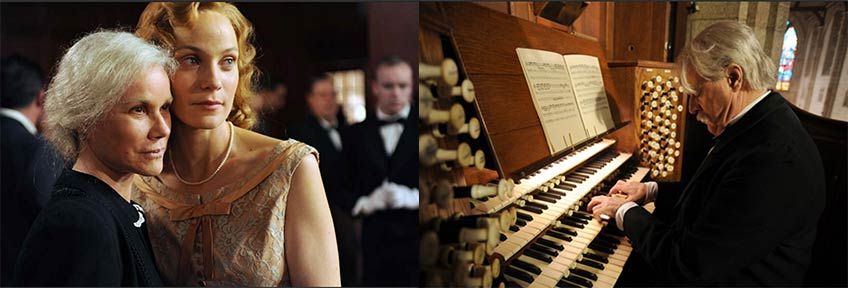
British director Gavin Millar focuses instead on a few crucial years of Schweitzer’s life: the period from 1949 to 1954, the year in which he received the Nobel Peace Prize for his philosophy of the "reverence for life."
The film also includes a flashback to the time before World War I, when Schweitzer built a hospital in Gabon at a time when there was a lack of everything – beds, nurses, medicines and bandages. His young wife Helen helped her husband selflessly and to the point of exhaustion.
Watched by the CIA
Schweitzer’s convictions were challenged during a lecture tour of the United States aimed at collecting donations for his jungle hospital.
His friend Albert Einstein – played in the film by German actor Armin Rohde – asked Schweitzer on behalf of his colleagues for support in the fight against the nuclear bomb threat back at that time. Schweitzer hesitated and became the victim of a deliberate slander.
The CIA suspected him of anti-American propaganda and communist activities. It decided to send a young agent masquerading as journalist Phil Figgis – played by Samuel West – to monitor Schweitzer's activities.
In Gabon, the government threatened to close down his hospital, but Schweitzer, assisted by his colleagues and patients, eventually managed to turn things around.

Renowned cast
Director Millar has hired top actors for his latest film. Oscar-nominated Hollywood actress Barbara Hershey has already won the Palme d'Or at Cannes for her portrayal of the self-sacrificing Helene Schweitzer. Samuel West of the Royal Shakespeare Company, who has been praised for his roles in literary adaptations, plays CIA agent Phil Figgis.
Millar has captivated the audience with this film, which depicts a chapter of political history of the 20th century.
"Schweitzer was once famous and popular like Nelson Mandela – known throughout the world as a great humanist and philosopher," said Millar." Today, he is hardly known."
That’s something this movie is hoping to change.
REVIEWS from Outside Sources
Movie review for Albert Schweitzer - Ein Leben für Afrika
From Michael Föls on 17/01/2010 rating: 4 / 10 points
"Reverence for Life," was the famous motto of Albert Schweitzer , one of the greatest humanists of the past century. Nowadays, most know only little about the versatile intellectual who was by his African bush hospital Lambaréné world fame, and was finally honored with the Nobel Peace Prize. Since the name of Albert Schweitzer still is a synonym for the do-gooders, but have very few concrete knowledge about Schweitzer, a biopic makes perfect sense.Unfortunately, it lacks the finished product but at corners and edges, so that slowly runs all in futility.
Albert Schweitzer ( Jeroen Krabbé ) leaves in 1949 together with his wife Helene ( Barbara Hershey ) be Lambaréné Hospital in Africa, to raise funds in America. Schweitzer is considered a highly regarded, and with its organ concerts and lectures can earn good money back to the arms of benefit to later. But Schweitzer is in the midst of the Cold War, and in a moral dilemma. On one side asks him his good friend Albert Einstein ( Armin Rohde ) to join his protests against the nuclear bomb, on the other side would Schweitzer risking in the crosshairs of the anti-communist faction to fall around Senator McCarhty what him with problems could pave the donations ...
Gavin Millar's Albert Schweitzer film it would, for lack of competition, not too hard to have to attract interested in the topic, but you should be aware in advance equal to some facts. On the one hand, the film does not even try to be a large-scale biopic that graze as many points.Instead predominantly one focuses on the theme Lambaréné and the nuclear conflict. This is not necessarily a bad thing, but you should be aware that a comprehensive treatise is not guaranteed. On the other hand must also be clear that Albert Schweitzer has become a very superficial film that shows hardly new, and at whose meaningfulness we also may doubt therefore happy.
Whoever already informed going into the film, will be disappointed as we learn little new from the film. On Details lays Albert Schweitzer nor worth as on facets, and so only the most important cornerstones are discussed. However, if still nothing by Albert Schweitzer, perhaps with the exception of his name, know who gets at least a brief outline, so that you begin to have any idea has what is at stake at the Albert Schweitzer topic. A problem here is that the film all possible counterpoints as the authoritarian style of leadership, and the conflict between family and work, dismisses as trivialities, and almost humorous dissolves so that Albert Schweitzer unfortunately largely degenerate into unthinking gooder fable.
These problems can be even life, but the film never really justify why he actually runs in the cinema, and is not sent as a television movie. The staging is located uncreative and stuffy, although the performers act strong, but can not allude to the one-dimensional and encrusted writer, and the images shown are indeed fine, but somehow smooth and unloving. Albert Schweitzer is thus certainly not a movie you must see, as it makes a whole too much wrong, and indeed entertaining, but it is also inspirtations- and lifeless. Big screen looks different because Albert Schweitzer would have deserved something better.
+++++
The Good Person of Lambarene
Rüdiger Suchsland
He was almost too good to be true: physician, humanist, philosopher of life (his work "Reverence for Life" was a bestseller of its time), Nobel Peace Prize. Schweitzer - came from a alemannisch-Alsatian family, and was born in the Upper Rhine was that at that time part of the German Empire - studied after high school in Mulhouse, Strasbourg and Berlin theology and philosophy, and later medicine, before he left in 1913 as a missionary to Africa , he became famous quickly, and at least since the '40s, he was respected throughout the world, a friend of the ways of his time, such as Albert Einstein and Otto Hahn, as the poor, the humiliated and insulted to the advocate he became. A kind of secular saint in our seemingly hopeless world. Albert Schweitzer, born a German in Alsace, is a shining light on gray sky of German history, but it is us, as some other form of light, also caught strange. What do you actually still about Albert Schweitzer (1875-1965)?
Gavin Millar film Albert Schweitzer - Ein Leben for Africa attempted to play a little plastic to call Schweitzer into memory and become visible as a human being can be. If he just now coming into our cinemas, which fits into the humanistic mind of the main character not only perfect for Christmas. It fits well also means that production company and rental NFP, have with the cinema biographies Protestant hero apparently found their specific market niche and specialize in a corresponding evangelical audience clientele. Previously it was the Bio-dramas Bonhoeffer - The final stage and Luther - especially the latter, the time started at Reformation holiday, draw in the crowds.
So now Albert Schweitzer. The plot of the film does not try to check off which all life stages chronologically - they are touched only in flashbacks short reminder - but revolves around a relatively short but important margin in Schweitzer's life: the years between 1949 and 1959. The horrors of World War II are still close presence, the Cold war begins. Schweitzer (Jeroen Krabbé) works as a jungle doctor in Lambarene / Gabon, regularly publishes writings about Jesus, Bach or his work in Africa, and regularly lectures in the West. The film continues with such travel Schweitzer a by the United States, on the gathering of donations for Lambarene. But as he also Albert Einstein supported in its fight against the nuclear bomb, Schweitzer become the target of a smear campaign. The Americans, more precisely, right-wing Communists eaters around the notorious Senator McCarthy, are also in this film once again the villain - a somewhat one-sided drawing whittle Schweitzer opponents to caricatures. In addition, sometimes, after all, not entirely grasped from the air oppose Schweitzer's own position in their relevance not occur.
So has this film no political enlightenment, but rather - apparently - easily consumable holiday fare - but which nevertheless is a difficult in retrospect in the stomach, because it leaves many questions unanswered.
Director Millar contributes stylistically quite thick, and told Einstein's story as a kind of Christmas tale. Einstein is in the same time a dear Nicholas, who preaches with a white beard, pith helmet and a kindly glance world peace and morality, as well as a sometimes nasty Bogeyman who has been tackling the Africans in Lambarene slightly harder - because it's otherwise not hear ( at least that he and his director). But also to his wife Helene (Barbara Hershey) and the adult daughter Rheena (the German Jeanette Hain in a beautiful small appearance) is this Einstein a gnarled and sometimes quite irascible patriarch. So this movie is quite different on the other hand a too simple glorification of its main character from pleasant.
The cinematic presentation is modest - to say: Without artistic ambition illustrate beautiful African postcard designs an action which is rather tough advanced through the dialogues. Armin Rohde is in his surprise appearance as Albert Einstein (!) Basically convincing, sometimes badly chargierend. What lasting memories, is the impression of a vigorous, multifaceted man, an interesting and remarkable life story in the 20th century.
+++++
IMDB Review
Not too sure if justice was done
11 August 2016 | by Thomas (filmreviews@web.de) (Berlin, Germany)
"Albert Schweitzer" is a 110-minute live action film from 2009, so it's already over 5 years old. The director and one of the writer trio here is Gavin Millar, a TV BAFTA winning Scottish filmmaker. The title character is played by Jeroen Krabbé, but the most known cast member is probably Oscar nominee Barbara Hershey. It is a co-production between Germany and South Africa and the main language here is German. Probably almost everybody has heard the name Albert Schweitzer, but he is one of the guys where you know he's a good guy, but you don't really known very much in detail what it was exactly that made him one of the good guys except that it was charitable work. The good thing is that, in this film here, you will find out about it. The bad thing is that I don't think that justice was really done to the person. It is not really the fault of Krabbé or Hershey, but I just felt that the film was never really as interesting or even touching as it could have been if it had worked out. I am fairly certain that a better script could have made this a really exciting and significant film. Schweitzer would have deserved and I guess this weak script is also the reason why this film, actually the most known one about the character, is still extremely unknown. The world's biggest film site and it has less than 250 ratings and zero reviews. Enough said. It's especially sad to see three writers work on the project here and yet this is all they came up with. The cast includes a handful familiar faces too for German cinema buffs, such as Hain, Meyer, Ulrich or Rohde playing Albert Einstein. But these names also ting to me that this is a group of actors who is more known for their charisma than for great range. But this is just one of a whole lot of minor flaws that add up however and turn this into a film that is not memorable by any means. It also drags quite a bit and should have been shorter, more focused and more essential. I give it a thumbs-down. Not recommended.

More Background On AlbertSchweitzer-TheMovie.com
AlbertSchweitzer-TheMovie.com once served as the official English-language promotional website for the 2009 biographical drama Albert Schweitzer, directed by Gavin Millar and starring Jeroen Krabbé and Barbara Hershey. Although the website is no longer active in its original form, its archived versions and surrounding publicity materials provide meaningful insight into the film’s intentions, production background, reception, and broader cultural significance. This article explores the website’s structure, purpose, content, and legacy while also contextualizing its relationship to the film and the enduring relevance of Albert Schweitzer as a historical figure.
Origins and Ownership of the Website
AlbertSchweitzer-TheMovie.com was originally operated to promote the 2009 European feature film distributed by production entities associated with Two Oceans Production (TOP), NFP Marketing & Distribution, and related European partners. As with many film-specific websites of the late 2000s, it was designed as a centralized hub for English-speaking audiences despite the movie being primarily released in European markets.
The domain was later allowed to expire, eventually being purchased and repurposed by a private owner who sought to reconstruct the original informational content using archived materials and public sources. Partial remnants—such as poster artwork, summaries, cast information, and distribution details—were accessible through the Internet Archive’s Wayback Machine, though the site never contained extensive multimedia assets compared to other film sites from the same era. The site’s minimal original structure suggests it was designed for quick promotional use rather than long-term audience engagement.
Purpose and Goals of AlbertSchweitzer-TheMovie.com
The primary goals of the original website were:
-
To introduce international audiences to the film’s storyline, cast, and production team
-
To promote the English-language version of the German/South African co-production
-
To provide basic film details—runtime, ratings, release dates, and studio information
-
To direct audiences toward theatrical and DVD release information
-
To present promotional stills and the official movie poster
-
To support screenings and festival showings in Europe
The website functioned as a digital press kit, focusing more on informational clarity than interactive features. This was typical for independent and international films of the late 2000s, especially those with limited U.S. distribution.
Film Context: The Story Behind the Promotion
The movie Albert Schweitzer portrays a defined period of Schweitzer’s life, centering on events between 1949 and 1954. Rather than functioning as a full cradle-to-grave biographical piece, the film highlights the philosophical and political pressures Schweitzer faced during the early Cold War. This focus shaped the marketing tone of the website, which emphasized:
-
Schweitzer’s global reputation as a humanitarian and Nobel Peace Prize laureate
-
Themes of integrity, sacrifice, and resistance to political manipulation
-
His philosophy of “Reverence for Life”
-
His hospital at Lambaréné in present-day Gabon
-
His interactions with political figures such as Albert Einstein
-
Conflict with U.S. intelligence agencies over anti-nuclear statements
The film’s promotional language mirrored the humanitarian positioning often associated with Schweitzer’s historical legacy.
Website Structure and Content
Although the original website was simple and lacked interactive media, its archived framework shows several core sections:
Film Overview
A concise description of the movie’s setting, themes, and historical context, highlighting Schweitzer’s moral struggle and his dedication to medical and humanitarian work in Africa.
Cast & Crew Profiles
Brief presentations of key actors, including:
-
Jeroen Krabbé as Albert Schweitzer
-
Barbara Hershey as Helene Schweitzer
-
Samuel West as Phil Figgis
-
Armin Rohde as Albert Einstein
The website also gave director Gavin Millar prominent mention, emphasizing his desire to avoid the typical pitfalls of biographical films by narrowing the narrative focus to a critical timeframe.
Production Notes
Descriptions of filming locations, including the elaborate recreation of the Gabonese village of Lambaréné constructed in South Africa. Promotional materials highlighted the authenticity of the set, which involved dozens of craftsmen replicating the 1950s environment.
Historical Background
Some archived components summarized Schweitzer’s philanthropic history, his founding of the Lambaréné hospital, and his recognition as a major humanitarian thinker of the 20th century.
Promotional Poster and Images
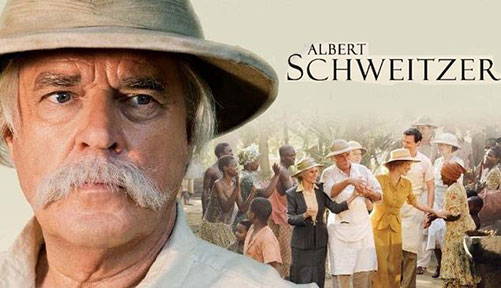
The site prominently featured the official poster artwork, which was often the only surviving visual element in archived versions.
Website Popularity and Online Presence
The website was moderately trafficked at the time of the film’s European release but never reached mass popularity due to several factors:
-
The film did not receive a U.S. theatrical release, limiting international buzz
-
Its genre—historical humanitarian drama—appealed to niche audiences
-
It lacked major Hollywood marketing resources
-
Social media platforms were still emerging as primary promotional tools in 2009
However, its presence online served an important role for educators, historians, and film enthusiasts seeking information about the movie and its availability. Over time, as the domain expired and was repurposed, fans and researchers increasingly relied on third-party sources such as IMDB, film reviews, and academic articles to find information once hosted on the site.
Distribution, Location & Availability
Although Albert Schweitzer was promoted through an English-language website, its release strategy focused mainly on:
-
Germany
-
Switzerland
-
Austria
-
Hungary
-
France
Later, English-language distribution became available through streaming platforms and DVD, allowing a broader international audience to access the film. This distribution structure explains the website’s design: it aimed to serve English-speaking viewers who did not have access to theatrical screenings but might discover the film through international publicity or academic interest.
Awards and Critical Reception
While the film did not achieve major international awards, its cast drew attention due to their distinguished careers. Barbara Hershey, in particular, brought significant recognition due to her past accolades, including a Cannes Palme d’Or and a Golden Globe nomination. Critics generally applauded the film’s intentions and subject matter but provided mixed reviews regarding execution, pacing, and depth.
Common points noted in external reviews included:
-
Strong acting performances, particularly by Krabbé
-
Impressive set recreation and period detail
-
Limited narrative scope
-
A tendency toward simplicity in character conflict
-
Slow pacing and lack of cinematic dynamism
Despite mixed critical assessments, many reviewers appreciated the film’s attempt to revive interest in an important historical figure who has become less recognized in contemporary discourse.
Audience and Cultural Impact
The target audience for both the film and the website included:
-
Humanitarian organizations
-
Christian and mission-based communities
-
Educators and academic institutions
-
Peace studies and philosophy programs
-
Viewers interested in African history
-
Admirers of Schweitzer’s writings and musicology
Schweitzer’s philosophy of “Reverence for Life” continues to resonate with modern ethical debates surrounding global responsibility, medical missions, sustainability, and humanitarian intervention. The website supported this continued relevance by making information about the film accessible to English speakers.
Historical Significance of Schweitzer’s Story
The film—and by extension the website—played a role in introducing younger or unfamiliar audiences to Schweitzer’s extensive legacy, including:
-
His Nobel Peace Prize in 1952
-
His contributions to theology and philosophy
-
His work as a musician and organist
-
His foundational medical practice in Lambaréné
-
His outspoken critique of nuclear weapons
-
His controversial interactions with colonialism and Western policy
Promoting these topics via a dedicated film website helped rekindle historical discussions at a time when Schweitzer’s global fame was fading.
Press & Media Coverage
Media reception of the film highlighted several notable themes:
Authenticity of the Set Design
Journalists praised the detailed recreation of the Lambaréné hospital grounds, noting the involvement of numerous craftsmen and the importation of trees and vegetation to emulate the original environment.
Representation of Historical Figures
Coverage emphasized the portrayals of both Schweitzer and Einstein, particularly in relation to Cold War political pressures.
Narrative Choices
Some commentators noted the film’s avoidance of broader biographical coverage, calling it both a strength (focused storytelling) and a weakness (lack of depth).
Humanitarian Message
Media outlets applauded the film for bringing attention to Schweitzer’s humanitarian ideals, especially during a time of renewed global interest in ethics and medical outreach.
Cultural Perception and Legacy
AlbertSchweitzer-TheMovie.com contributed to maintaining public awareness of Schweitzer’s life at a time when global recognition was declining. The film and its promotional website sparked discussions regarding:
-
Moral courage in political climates
-
Ethical medical practice in underserved regions
-
Historical comparisons to modern humanitarian figures
-
The role of Western influence in African healthcare initiatives
-
The intersection of faith, science, and social responsibility
These discussions helped contextualize Schweitzer’s contributions for contemporary audiences, demonstrating his ongoing influence in humanitarian philosophy.
Technical Characteristics of the Website
The website reflected typical late-2000s film promotion design:
-
Minimalist layout
-
Limited multimedia
-
Single landing page with navigation anchors
-
Poster-centric visual focus
-
Press-style text blocks
-
Basic SEO metadata for film keywords
-
No interactive trailers or downloadable press kits
Given its narrow release footprint and modest promotional budget, the site’s simplicity was consistent with independent international film marketing strategies of the time.
Reasons for Domain Expiration and Repurposing
Film-specific domains frequently expire after the marketing cycle ends because:
-
Studios consolidate information on central distribution platforms
-
The cost of maintenance outweighs promotional benefits
-
Licensing periods expire
-
Streaming platforms assume the role of information providers
-
Fansites and databases (IMDB, Rotten Tomatoes, Wikipedia) provide more sustainable access
When the domain expired, it entered the aftermarket and was subsequently acquired by an independent owner seeking to preserve the film’s memory and historical significance through reconstructed content.
AlbertSchweitzer-TheMovie.com served as an important access point for international audiences interested in the 2009 film Albert Schweitzer, offering essential information about its cast, production, themes, and historical context. While modest in design and limited in content, the website effectively supported the film’s mission to reintroduce a humanitarian icon to modern viewers. Its legacy continues through archived materials, audience recollections, and ongoing digital preservation efforts.